
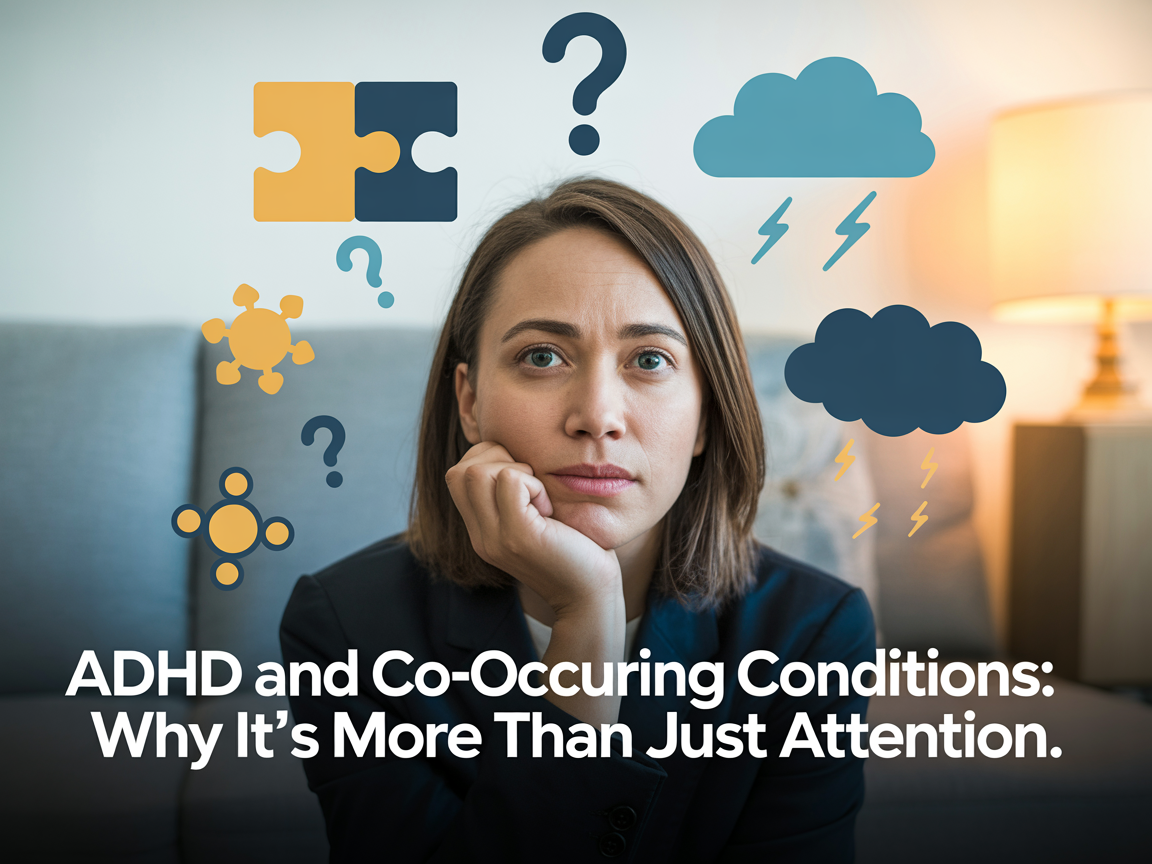
If you’ve been diagnosed with ADHD, you may have noticed that it rarely comes alone. Many people with ADHD also deal with anxiety, depression, learning difficulties, or substance use challenges. These additional conditions—called co-occurring (or “comorbid”) disorders—are common and can make life even more complicated.
The good news? Once these conditions are identified, they can be treated together, often leading to better outcomes for your ADHD and overall well-being.
Why Do Co-Occurring Conditions Happen So Often With ADHD?
ADHD affects more than just focus—it impacts emotional regulation, motivation, and stress responses. Over time, this can set the stage for other challenges.
Some reasons why co-occurring conditions are so common include:
- Shared brain pathways: ADHD and conditions like anxiety or depression often involve the same brain chemicals (like dopamine and serotonin).
- Life stress: Years of struggling with school, work, or relationships without understanding your ADHD can lead to low self-esteem and mental health challenges.
- Genetics: If you have ADHD, you’re more likely to have family members with similar conditions, increasing your risk for overlapping issues.
Common Co-Occurring Conditions
1. Anxiety Disorders
Up to 50% of people with ADHD also experience anxiety. This may look like constant worrying, racing thoughts, or physical symptoms like a racing heart.
Sometimes anxiety is secondary to ADHD—years of missed deadlines or misunderstandings can create overwhelming stress. Other times, it’s a separate condition that needs its own treatment plan.
2. Depression
Living with untreated ADHD can lead to chronic feelings of failure, hopelessness, or low motivation. About 30–40% of adults with ADHD will experience depression at some point.
3. Substance Use Disorders
People with ADHD are more likely to use alcohol, nicotine, or other substances—sometimes as a way to self-medicate racing thoughts or restlessness.
4. Learning Disorders
Conditions like dyslexia or auditory processing disorders often overlap with ADHD, making school or work even more challenging.
5. Emotional Dysregulation
While not a separate diagnosis, emotional impulsivity—frequent mood swings, frustration, or outbursts—is common in ADHD and can feel like an entirely separate issue.
Why This Matters for Treatment
If co-occurring conditions aren’t addressed, ADHD treatment may not work as well. For example:
- Treating ADHD without addressing anxiety can leave you focused—but still overwhelmed.
- Treating depression without treating ADHD may improve mood—but not the ability to follow through on daily tasks.
The best approach: Treat both at the same time. This may mean combining medication, therapy, and lifestyle changes for a more holistic plan.
How Co-Occurring Conditions Are Treated
Your provider may recommend:
- Medication: Adjusting ADHD medications, or adding an antidepressant or anti-anxiety medication if needed.
- Therapy: Cognitive-behavioral therapy (CBT) helps manage anxiety, depression, and emotional regulation.
- Lifestyle changes: Exercise, mindfulness, and structured routines reduce stress and support brain health.
- Specialized support: For learning disorders or substance use, targeted interventions (like tutoring or addiction counseling) may be needed.
Pro tip: Be open with your provider about all your symptoms—not just the ADHD ones. This helps them create a full picture of what’s going on.
When to Talk to Your Provider
Reach out if you notice:
- Persistent sadness or loss of interest in activities you enjoy.
- Constant, overwhelming anxiety that doesn’t improve.
- Difficulty controlling substance use.
- Academic or work struggles despite ADHD treatment.
These are signs you may need additional support.
The Takeaway
ADHD rarely exists in isolation. Anxiety, depression, substance use, and learning challenges often go hand-in-hand, but they aren’t permanent roadblocks.
The right diagnosis and treatment can help you manage not only your ADHD but also the other conditions affecting your quality of life. You don’t have to choose which to treat first—an integrated plan can address them all.
Struggling with multiple symptoms?
At Physicians Now, our ADHD specialists are experienced in identifying and treating co-occurring disorders using personalized, doctor-led telemedicine care. With a 95% treatment success rate and concierge-level access to your physician, we help you get clarity—and the right treatment plan.
Book your appointment today and get the answers and support you deserve.
Trending Articles
How is ADHD Diagnosed? A Step-by-Step Guide

Are Celsius & Caffeine Drinks Bad for You?
ADHD and the To-Do List: How to Stop Drowning in Tasks and Start Taking Control